

LGBTQ Equality Maps Updates and Bill Tracking for April 2024
MAP's LGBTQ Equality Maps provide a detailed snapshot of the current state of LGBTQ laws and policies in the United States.
See below for the latest state policy updates and bill tracking as of April 5, 2024. In this month's edition, state-level policy changes are sorted by updates that are positive and include protections for LGBTQ people, or negative and limit access to education, medical care, IDs, services, and more.
Positive Policy Updates
- Pathways to legal recognition of parent-child relationships
- LGBTQ-related curricula in schools
- Marriage licenses
- Gender neutral markers on driver's licenses
- Lawsuit against Ohio's ban on transgender youth medical care
- Vetoing a ban on transgender youth playing school sports
Negative Policy Updates
- LGBTQ curriculum censorship
- Restrictions on gender marker changes on driver's licenses
- Bans on transgender people's use of bathrooms and facilities
- Bans on medical for transgender youth
- Religious exemptions: for medical providers, for child welfare services, broad RFRAs
- Transgender-related healthcare for state employees
- Medicaid coverage for transgender-related health benefits
- Bans on gender-neutral markers on birth certificates
Below, you will find a summary of recent state-level policy changes. To read all of our Equality Maps Updates for April 2024, click here or below.
Read MAP's full Equality Maps Updates for April 2024
Vetoing a ban on transgender youth playing school sports
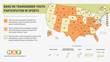
- 24 states have laws that ban transgender students from participating in sports consistent with their gender identity.
- In Alaska, state regulations ban transgender students from participating in sports consistent with their gender identity.
Latest policy update:
- April 2: The Wisconsin governor vetoed a ban on transgender youth playing school sports. This is the 12th veto of such a ban. MAP's fact sheet includes the full listing and timeline of states that have vetoed these kinds of bills.

Pathways to legal recognition of parent-child relationships
Equality Maps | Fact sheets on VAP and assisted reproduction
- 12 states expand voluntary acknowledgement of parentage (VAP) to LGBTQ and non-genetic parents.
- 17 states and D.C. recognize parents of children born through assisted reproduction regardless of the parents' marital status. This is significant as nearly 1 in 3 LGBTQ adults in the U.S. are raising children under the age of 18, many living in states that still have outdated parentage laws.
Latest policy update:
- April 1: In Michigan, the state enacted the Michigan Family Protection Act, a package of nine bills that modernize the state's parenting laws.
For additional information on the importance of parentage laws for LGBTQ families, see MAP's report "Relationships at Risk: Why We Need to Update State Parentage Laws to Protect Children and Families."
LGBTQ-related curricula in schools
- Seven states have laws that explicitly require LGBTQ inclusion in state curricular standards.
Latest policy updates:
- March 11: In Florida, a settlement was reached that narrows the harm of the state's "Don't Say LGBTQ" law. While Florida's ban on LGBTQ-related content in curriculum and classroom instruction remains in place, the settlement makes clear that students can ask questions about LGBTQ issues and teachers can respond, schools can have safe space stickers and Gender-Sexuality Alliances (GSAs), and more.
- March 18: Washington became the seventh state to explicitly require that state curricular standards include LGBTQ people and history, such as in subjects like history or social studies.

Bans on medical care for transgender youth
- There are now 24 states with a ban or restriction on medically necessary, prescribed health care for transgender youth.
- Nearly 2 in 5 (38%) transgender youth live in states with these bans. However, lawsuits have been filed against the bans in 17 of these states
Latest policy update:
- March 22: Wyoming became the 24th state to ban transgender youth's medical care. The ban will not go into effect until July 1, 2024.
- March 26: In Ohio, a lawsuit was filed against the state's legislative ban on transgender youth medical care. The ban is set to go into effect on April 24, 2024, though the lawsuit includes an ask for the court to prevent the ban from going into effect or being enforced during the lawsuit.

Bans on transgender people's use of bathrooms and facilities
- Florida and Utah ban transgender people from using bathrooms and facilities consistent with their gender identity in all government-owned buildings and spaces, including K-12 schools, colleges, and more.
- Alabama and North Dakota ban transgender people from using bathrooms and facilities consistent with their gender identity in K-12 schools and at least some government-owned buildings.
Latest policy update:
- March 20: Alabama expanded its existing bathroom ban, which applies to bathrooms and facilities in K-12 settings, to include bathrooms and facilities in public colleges and institutions of higher education.
This bathroom ban was part of a larger bill restricting diversity, equity, and inclusion (DEI) efforts in higher education. The law does not go into effect until October 1, 2024.

Restrictions on gender marker changes on driver's licenses
- Currently, Kansas and Florida do not allow gender marker updates on driver's licenses.
- Nine states and two territories requires proof of surgery, court order, or amended birth certificate to change gender markers on driver's licenses.
- Transgender and nonbinary people must navigate a complicated patchwork of state policies to obtain IDs, as the requirements and processes to get a legal name change or update a gender marker vary from state to state and even from one form of ID to another.
Latest policy update:
- March 7: Arkansas' Department of Finance and Administration, which oversees driver's licensing in the state, issued a proposed "emergency" rule that made two significant and harmful changes to the state's policies.
Read more about Arkansas here, or click below to read our full update.
Read MAP's full Equality Maps Updates for April 2024
Local Policy Updates
The city of Bethany, West Virginia, with a population of 762 people, enacted a nondiscrimination ordinance covering both sexual orientation and gender identity in employment, housing, and public accommodations.
Bethany is the 19th city in the state with these protections.
MAP's LGBTQ Equality Bill Tracker
To continue highlighting trends across the country, included below are our current bill tracking counts for anti-LGBTQ bills in state legislatures.
Note: these counts may differ from other organizations or public counts for a variety of reasons, and this work is greatly facilitated by the work of other organizations, including the ACLU and the Equality Federation and their member state groups.
As of April 4, 2024, the count of anti-LGBTQ bills so far in 2024 is:
- At least 475 anti-LGBTQ bills have been introduced across at least 40 states.
- At least 39 bills redefining "sex" to enable discrimination against transgender people have been introduced across at least 20 states.
About MAP: MAP is an independent, nonprofit think tank. We work to create a thriving, inclusive, and equitable America where all people have a fair chance to pursue health and happiness, earn a living, take care of the ones they love, be safe in their communities, and participate in civic life. www.mapresearch.org
LGBT Movement Advancement Project
Other LGBT Movement Advancement Project Articles
Founded in 2006, the Movement Advancement Project is an independent think tank that provides rigorous research, insight and analysis that help speed equality for lesbian, gay, bisexual and transgender (LGBT) people. MAP’s work is focused on three primary areas:
Connect With Us