

Barriers to ID Access Impact Everyone - Here's Why.
The United States has a long history of making it difficult for marginalized communities to succeed, but today, the road to health and happiness is becoming more and more narrow for everyone.
A number of avoidable barriers exist that make it harder to get identity documents (IDs), like driver's licenses or birth certificates??even though those same IDs are required to access many basic needs and services. These barriers create and perpetuate a harmful cycle that makes existing inequalities worse and harms those who are less able to access the right documents.
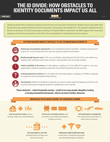
A new MAP infographic highlights the many barriers to obtaining an ID in 2025 and the unique ways not having an ID impacts different communities.
Why Does Access to Identity Documents Matter?
Identity documents (IDs) are vital keys necessary to open the doors to so many parts of everyday life. They allow people to start new jobs, open bank accounts, find stable housing, enroll in school, participate in civic life, travel, and so much more. In addition, ID documents are essential to successfully navigate the following:
- Moving
- Changing one's name
- Adoption
- Changing citizenship status
- Updating a gender marker
- Renewing an expired ID
Today, more than ever before, state legislatures have implemented new laws and policies targeting specific communities that ultimately create barriers to ID access. These include restrictions on updating documents to include accurate gender markers and laws that redefine sex in state law, which make it harder, if not impossible, for transgender and nonbinary people to obtain ID documents. Additional barriers to ID access, including burdensome documentation, needlessly high financial costs, limited availability of ID services, and confusing policies also impact many communities, including low-income people, people experiencing housing insecurity or homelessness, undocumented immigrants, and many others.
Recommendations to Ensure Equal Access
Instead of making it harder or even impossible for people to access or update IDs, we should focus on removing barriers and ensuring equal access for all. Because IDs are vital keys that open doors to nearly every part of life, there are at least two paths forward to ensure everyone has an opportunity to participate in daily life, our democracy, and our society: making sure everyone has or can access a key, and removing the doors themselves whenever possible. Some recommendations include:
- Simplify documentation requirements and processes
- Reduce the needlessly expensive costs of getting or updating IDs
- Increase access to ID services and to IDs themselves
- Set minimum standards or requirements for accessibility of IDs across the country to reduce confusion
- Reduce discrimination in both ID policies and their administration
Overall, a complicated patchwork of policies, combined with unnecessarily high fees and ongoing discrimination, means that millions of people are unable to access some of the most basic needs and services required to participate in civic life, simply because they don't have a valid ID. However, there are clear, achievable paths forward for promoting public safety and good governance while still ensuring the rights of people to move freely, have their needs met, and have an equal opportunity to participate in civic and everyday life.
About MAP: MAP's mission is to provide independent and rigorous research, insight and communications that help speed equality and opportunity for all. MAP works to ensure that all people have a fair chance to pursue health and happiness, earn a living, take care of the ones they love, be safe in their communities, and participate in civic life. www.mapresearch.org
LGBT Movement Advancement Project
Other LGBT Movement Advancement Project Articles
Founded in 2006, the Movement Advancement Project is an independent think tank that provides rigorous research, insight and analysis that help speed equality for lesbian, gay, bisexual and transgender (LGBT) people. MAP’s work is focused on three primary areas:

Connect With Us